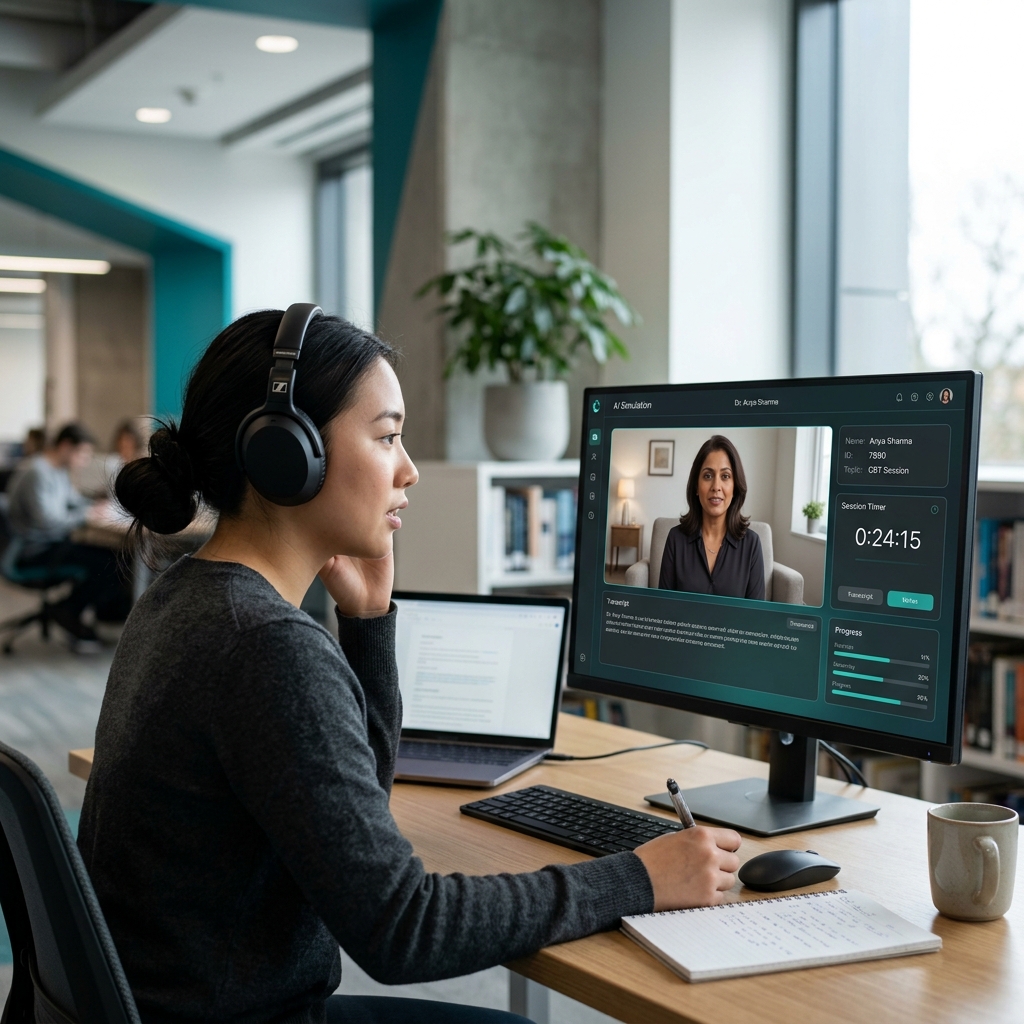
Stress-inoculation crisis simulation adapts aviation flight simulator concepts for mental health training. The platform uses voice-based AI to present high-stakes scenarios—such as acute suicidality or hostile de-escalation—while measuring student vocal tremor, pacing, and somatic stress. The AI dynamically calibrates the client's volatility to train students in maintaining clinical composure.
Aviation, military, and emergency medicine programs have long relied on high-fidelity simulators to prepare trainees for worst-case scenarios. Fighter pilots complete hundreds of hours in flight simulators, navigating engine failures, extreme weather, and hostile environments, before they ever take off. They develop 'muscle memory' and a calm, automatic stress-response system that keeps them functioning when lives are on the line. In contrast, clinical psychology programs traditionally train students for acute crises—such as active suicidal ideation, self-harm, or severe client hostility—using textbooks, role-plays, and classroom lectures. The first time a student encounters a real client in crisis, they are often in their placements, with lives literally hanging in the balance.
The Crisis Preparation Paradox
This preparation gap is the 'crisis paradox' of mental health training. We cannot ethically expose students to real-world crises for practice, nor can we allow them to fail or experiment when a client is in acute danger. Classroom role-plays lack the raw emotional charge and vocal volatility needed to provoke a genuine stress response in the student. As a result, when students encounter their first high-risk client, they experience a surge of cortisol and adrenaline. Their cognitive capacity narrows, they struggle to recall active de-escalation protocols, and they may inadvertently escalate the situation through a tense vocal tone or rapid, anxious pacing.
Dynamic Volatility and Vocal Stress Analysis
Imagine a 'crisis flight simulator' for psychology. The simulator presents a high-stakes, voice-based interaction with an AI client in acute distress. What makes this simulation unique is that the virtual client's behaviour is dynamically connected to the student's somatic response. Using vocal stress analysis, the AI measures the student's pitch, tremor, and speaking rate in real-time. If the student speaks too quickly or with a high, anxious pitch, the AI client's volatility score increases, simulating an escalation of the crisis. To de-escalate the client, the student must actively regulate their own nervous system—speaking slowly, dropping their vocal pitch, and using firm, grounding, empathetic language. The client's distress level drops only when the system detects genuine somatic regulation in the student's voice.
| Crisis Level | Patient Volatility Indicators | Clinician De-escalation Requirement |
|---|---|---|
| Level 1: Distress | Somatic distress, tearful disclosure, moderate pacing | Active validation, open-ended reflection, slow vocal cadence |
| Level 2: Escalation | Rapid speech, defensive resistance, emotional withdrawal | Deep breathing, dropping vocal pitch, boundary-setting with empathy |
| Level 3: Acute Crisis | Hostility, hopelessness, self-harm disclosures | Somatic grounding, firm structured protocols, highly regulated pacing |
Building Somatic Resilience and Muscle Memory
The goal of this simulator is not just to test academic knowledge, but to build somatic resilience. By repeating high-stress crisis scenarios dozens of times in a psychologically safe sandbox, students inoculate themselves against clinical anxiety. They train their brains and bodies to respond to crisis not with a primitive 'fight-or-flight' freeze, but with a highly regulated, deliberate clinical posture. They develop hard muscle memory for safety-planning protocols, risk-assessment questioning, and verbal de-escalation templates, ensuring these skills are readily accessible even under extreme pressure.
Furthermore, this technology ensures greater safety for clinical agencies. Placement coordinators can have absolute confidence that students arriving at their clinics have already demonstrated the ability to maintain composure and execute crisis-safety protocols. This reduces supervisor burden, protects clinical agencies from adverse events, and ultimately saves lives by producing calmer, more somatic-resilient mental health professionals.
Frequently Asked Questions
Psych Ready Team
Building the future of psychology education with AI-powered clinical simulation.