Transforming Healthcare Education Across 10 Critical Use Cases
From large undergraduate lecture halls to high-stakes OSCE examinations, Psych Ready’s interactive clinical simulations provide deterministic, reproducible AI patient encounters with zero patient risk.
Core Training Domains
From classroom to OSCE exams
Verified Clinical Personas
Multimodal voices and avatars
Objective Rubrics
Eliminates subjective grading drift
Patient Risk
Safe sandbox for high-stakes drills
Designed for the Entire Healthcare Journey
Discover how universities, teaching clinics, and health networks embed Psych Ready across every level of clinical instruction and competency verification.

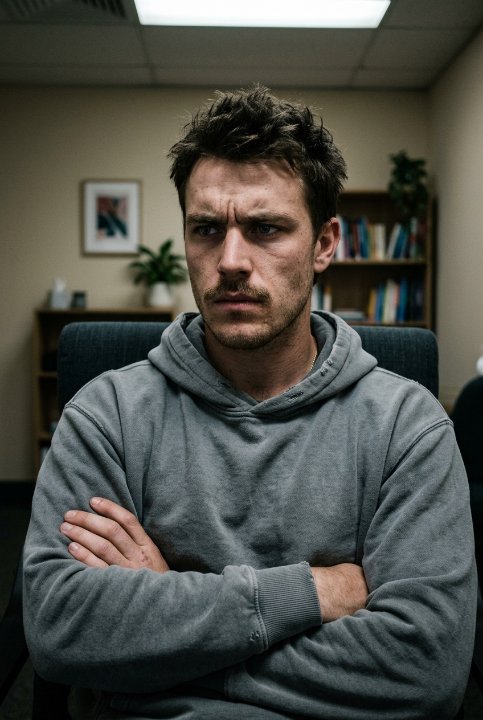
Tim Vance (Angry Client)
Classroom Teaching
Engage 300+ students with live, interactive decision branching in lectures.
Traditional lectures on clinical micro-skills are passive. Students listen to theories of de-escalation but never experience the fast physiological pacing or emotional tension of real therapeutic encounters.
Lecturers project Psych Ready directly onto the lecture theatre screen. The entire cohort votes via mobile phones on which therapeutic question or posture to adopt next. The simulation reacts dynamically to the class consensus, demonstrating the clinical consequences of empathy versus premature confrontation.
- Real-time cohort voting & decision-branching in lecture halls
- Dynamic emotional state shifts based on chosen verbal openers
- Immediate lecturer pause-and-debrief moments with auditable transcripts

Dr. Alistair Finch
Interviews & Admissions
Standardised clinical suitability screening with auditable rubric marking.
Postgraduate psychology admissions and registrar interview panels suffer from heavy interviewer fatigue, subjective bias, and variable questioning across candidates.
Psych Ready delivers standardised, reproducible admissions interviews. Every candidate is evaluated on reflective capacity, ethical reasoning, and psychological safety under identical conditions, generating automated competency scorecards.
- 100% identical interview conditions across candidate cohorts
- Automated evaluation of defensiveness and ethical problem-solving
- Elimination of interview panel cognitive fatigue and unconscious bias

Uncle Thomas
Cultural Training
Culturally responsive care and respectful practice with diverse communities.
Clinicians often experience anxiety about making cultural missteps, leading to overly rigid or checklist-driven interactions that inadvertently alienate culturally diverse clients.
Trainees enter a safe, supportive sandbox to practice cultural humility, conversational yarning, and patient listening. Co-designed scenarios teach clinicians how to honor community narratives and recognize systemic mistrust without patient harm.
- Practice respectful yarning before administering clinical assessments
- Objective feedback on listening pacing, pauses, and institutional avoidance
- Zero risk of community re-traumatisation during trainee education

Chloe Evans
Professional Development (CPD)
Accredited skill refreshes in CBT, ACT, and Motivational Interviewing.
Mid-career psychologists, counsellors, and mental health nurses need active, verified continuing professional development hours, yet traditional webinars remain purely passive.
Clinicians conduct real-time audio and text sessions against realistic clinical presentations. They drill cognitive restructuring, defusion exercises, and Socratic dialogues, earning verified CPD units with detailed diagnostic reports.
- Active experiential CPD units for registered healthcare professionals
- Realistic resistance, deflection, and cognitive distortions
- Immediate rubric feedback highlighting therapeutic fidelity

Liam O'Brien
Supervision
Our digital clients can join Zoom, Microsoft Teams, or Google Meet for live supervisor coaching.
Supervisors rarely observe live trainee sessions directly due to privacy regulations and client discomfort, having to rely solely on delayed trainee recall.
Our digital clients can join Zoom, Microsoft Teams, or Google Meet directly. Supervisors observe trainees in real-time, annotating moments of therapeutic alliance, pacing missteps, or emotional holding with full timestamped transcripts.
- Live supervisor observation without invading real patient privacy
- Synchronized audio, video, and automated clinical metrics
- Structured trainee post-session self-reflection prompts

Maya Lin
Placements
Prepare students for clinic and hospital placements before seeing live patients.
First clinical placements cause intense student anxiety. Supervisors must spend valuable initial weeks on basic intake mechanics and risk protocols instead of advanced clinical reasoning.
Students complete verified placement-readiness modules covering initial intake assessments, mental status examinations, and SOAP note writing. Interns arrive on day one confident, grounded, and familiar with clinic workflows.
- Full simulation of intake paperwork, consent, and alliance building
- Automated clinical documentation and SOAP note evaluation
- Significantly reduced supervisor onboarding burden in teaching clinics

Alex Vance
Remediation
Targeted, repeatable corrective drills for struggling clinical competencies.
When a trainee fails a clinical competence on placement—such as boundary setting or defensive confrontation—finding appropriate real-world clients to safely practice remediation is nearly impossible.
Faculty assign targeted remediation drills where students repeatedly practice navigating boundary crossings, rupture repairs, or hostile disclosures. The system provides instantaneous objective feedback until the competency is mastered.
- Unlimited low-distress repetition until mastery threshold is reached
- Zero risk of real-world patient boundary violations or clinical harm
- Defensible, auditable completion records for academic review boards

Sarah Kelly
Pre-Placement Safety Gating
Objective risk assessment verification before students are cleared for patient contact.
Universities cannot afford to send students into clinical settings who hesitate to ask direct suicide risk questions or fail to recognize lethality signs.
Psych Ready acts as a rigorous safety gate. Trainees must successfully navigate high-stakes scenarios—including acute suicide risk, domestic and family violence (WHO LIVES), and psychotic delusions—demonstrating flawless safety planning before clinical clearance.
- Rigorous verification of inherent safety requirements
- Direct evaluation of lethal means restriction inquiries
- Standardised safety gate passed before any human client interaction
David Miller
Assessment (OSCEs)
Standardised Objective Structured Clinical Exams with automated marking.
Standardised OSCEs using human actors cost thousands of dollars per exam cycle, suffer from actor performance drift between the 1st and 50th student, and lead to grading appeals.
Psych Ready provides frame-accurate, reproducible OSCE stations. Every candidate encounters the exact same client baseline, difficulty, and emotional response, scored against objective rubrics that satisfy training accreditation standards.
- Up to 80% cost reduction compared to professional standardised actors
- Complete grading reliability with zero actor fatigue or drift
- Time-stamped evidence trails defending grading against academic appeals

Jason Tang
School Psychology
Support students experiencing school refusal, social anxiety, and academic distress.
School psychologists, guidance officers, and child clinicians face complex adolescent dynamics where defensive barriers, parental frustration, and school attendance pressure make building therapeutic trust exceptionally difficult.
Psych Ready provides realistic child and adolescent simulations where clinicians practice de-escalating guarded attitudes, assessing school avoidance triggers, and collaborating on multidisciplinary support plans without risking vulnerable minors.
- Develop non-coercive rapport with guarded or reluctant adolescents
- Identify somatic anxiety markers underlying chronic school refusal
- Structure collaborative educational support plans with parents and teachers
Traditional Simulation vs. Psych Ready AI Simulations
Why universities and training clinics are modernising their clinical curriculum with deterministic AI simulations.
| Dimension | Traditional Actors / Peer Roleplay | Psych Ready AI Simulations |
|---|---|---|
| Availability & Scale | Limited by actor schedules, booking logistics, and physical room constraints. | Available 24/7 on demand. Simultaneous practice for 300+ students on any device. |
| Standardisation & Drift | Actors experience fatigue; inconsistent emotional delivery causes grading disputes. | 100% identical baseline conditions. Zero performance drift across 1,000 runs. |
| High-Stakes Safety Gating | Unsafe to roleplay acute psychosis or violent escalation with peers or vulnerable actors. | Zero patient or actor risk. Safe psychological sandbox for intense clinical crises. |
| Objective Marking & Evidence | Subjective paper rubrics vulnerable to memory bias and grade appeals. | Frame-accurate, timestamped transcripts with auditable clinical metrics. |
| Repeatable Remediation | Re-booking actors for remediation drills is cost-prohibitive. | Unlimited repeatable drills with immediate corrective feedback until mastered. |
| Institutional Cost | $150–$300 per student per exam cycle for actor wages and staging. | Up to 80% reduction in simulation and OSCE logistical overheads. |
Bring Interactive AI Simulations to Your Students
Join leading universities, health networks, and training clinics using Psych Ready to standardise clinical competency, eliminate actor bottlenecks, and prepare students for safe clinical practice.