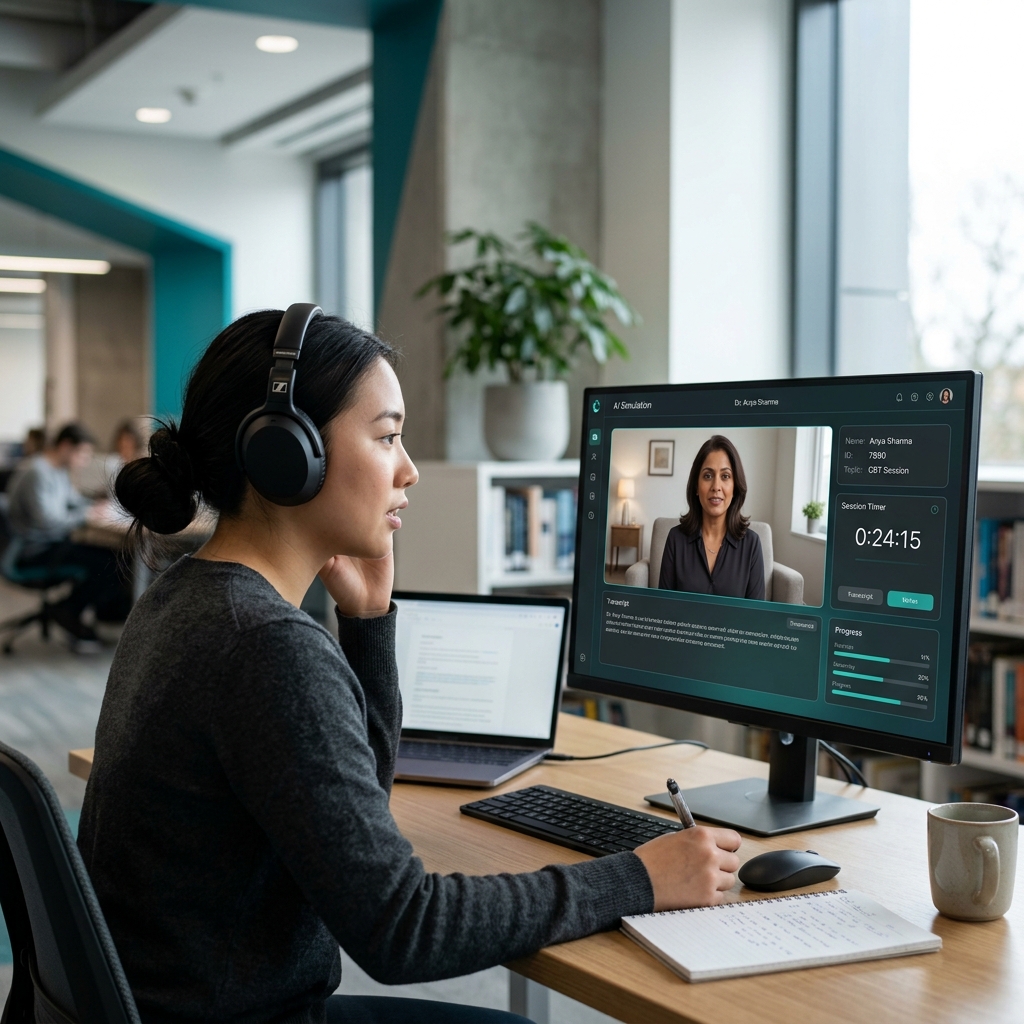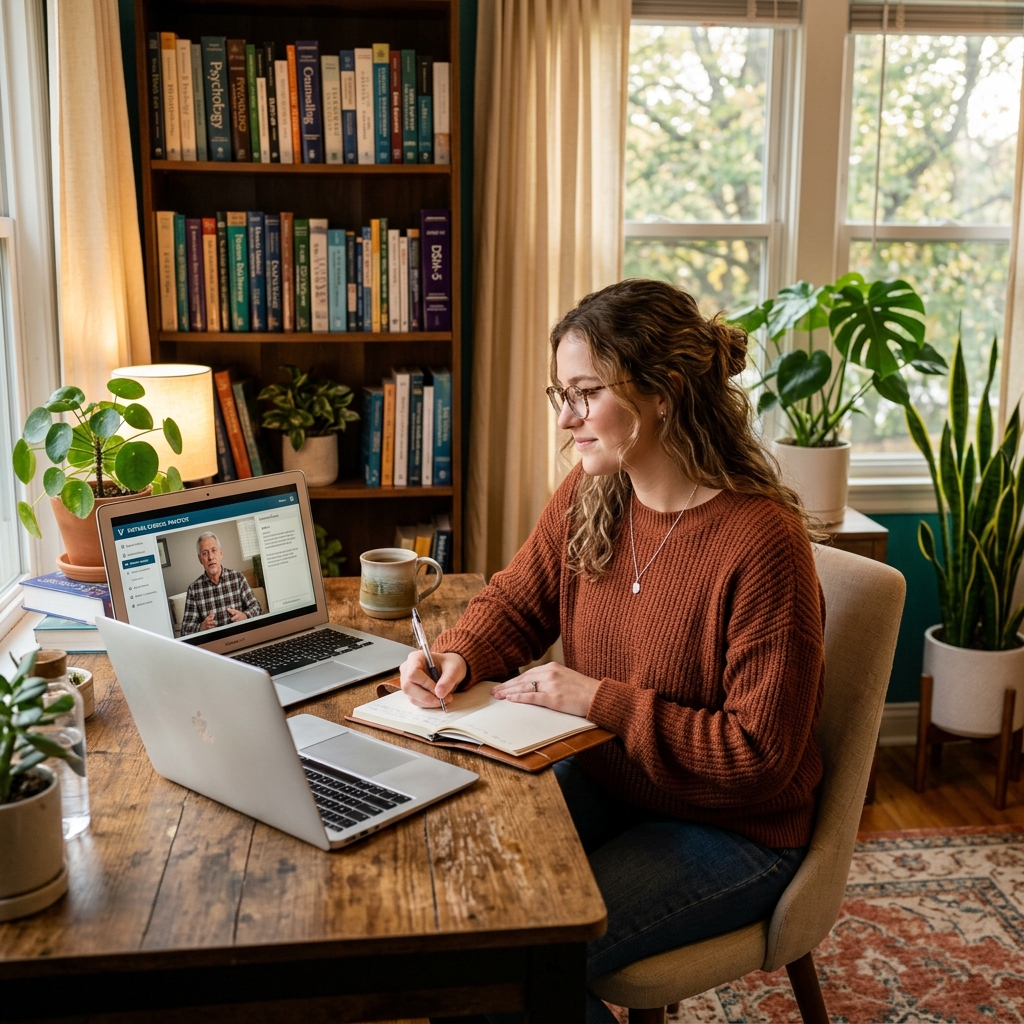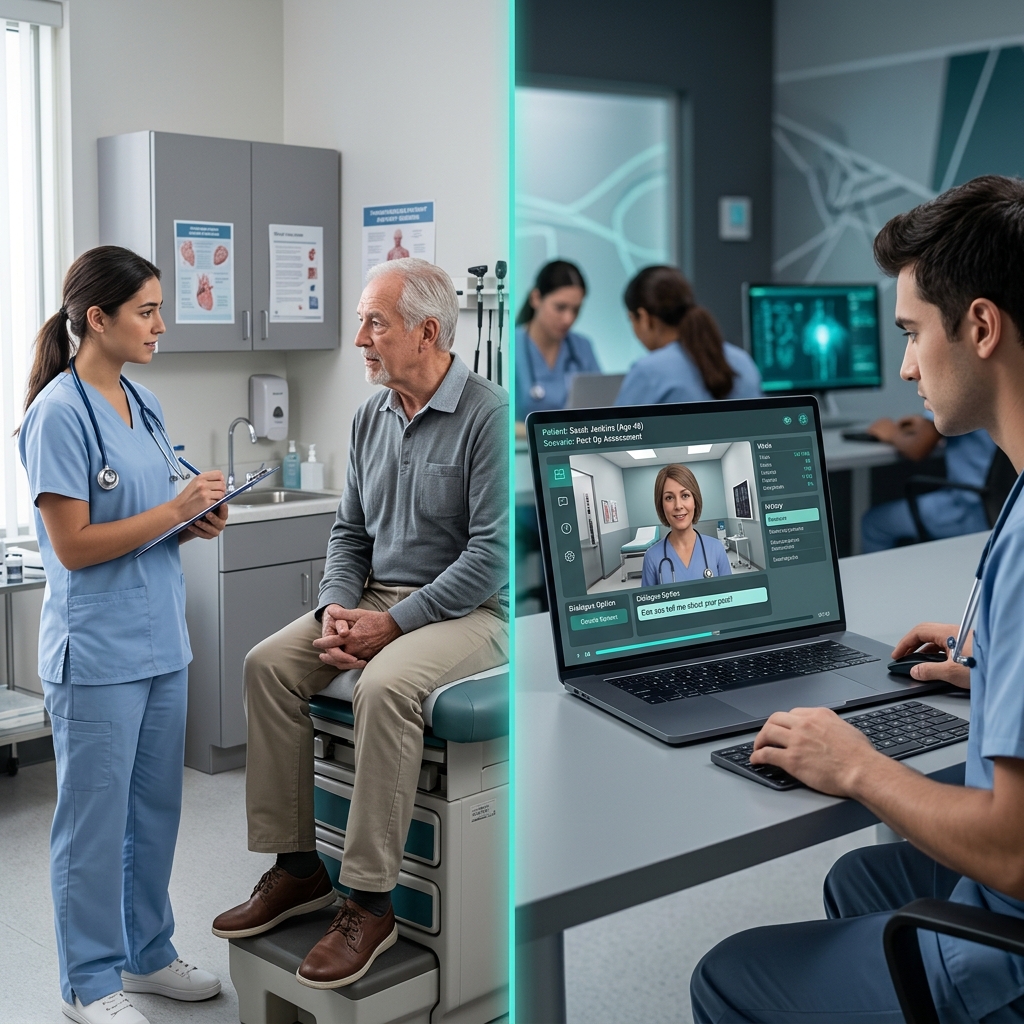
AI simulated patients offer 24/7 availability, consistent clinical presentations, and objective feedback at a fraction of the cost of traditional standardised patient programs. Traditional programs cost $200–500 per student per session, while AI platforms provide unlimited practice for a fixed institutional fee.
Standardised patients have been a cornerstone of clinical education for over five decades. From their origins in medical schools to their adoption across psychology, nursing, and allied health programs, they have proven their value in bridging the gap between theoretical learning and clinical competence. Now, AI-powered alternatives are emerging that promise to deliver comparable — and in some cases superior — training outcomes at dramatically lower costs. This article examines both approaches in detail to help program coordinators make informed decisions about their clinical training strategy.
What Are Standardised Patients?
Standardised patients (SPs) are individuals trained to consistently portray specific clinical scenarios for educational purposes. In psychology, SPs might present with symptoms of depression, anxiety disorders, substance use concerns, or personality-related difficulties. They follow detailed scripts that specify their backstory, symptom presentation, emotional responses, and how they should react to different therapeutic interventions. The "standardised" element means that every student encountering a particular SP should receive a comparable clinical challenge.
SP programs typically employ actors, community members, or dedicated simulation staff. They undergo extensive training to ensure consistency and realism. After each student encounter, SPs often provide feedback from the client's perspective — sharing what felt helpful, what felt disconnecting, and how authentic the interaction felt. This feedback is valuable but inherently subjective and variable across individual SPs.
The History of Simulation in Clinical Education
Dr Howard Barrows introduced the standardised patient methodology at the University of Southern California in 1963 to address a fundamental problem: medical students were graduating with extensive theoretical knowledge but limited clinical experience. The approach was revolutionary — for the first time, students could practise clinical skills in a controlled environment before encountering real patients.
Over the following decades, SP programs spread across medical schools worldwide and expanded into other health professions. Psychology programs began adopting SPs in the 1990s, initially for clinical interviewing and assessment skills. By the 2010s, SP-based OSCEs had become a common assessment method in psychology training. The emergence of AI simulation in the 2020s represents the next evolution in this trajectory — applying advances in natural language processing and generative AI to create virtual patients that can interact dynamically with students.
Detailed Cost Comparison
| Cost Factor | Traditional SPs | AI Simulation |
|---|---|---|
| Per-session cost | $200–500 per student | Fixed institutional fee |
| Actor recruitment & training | $5,000–15,000 annually | Not applicable |
| Scheduling & coordination | Significant staff time | Self-service, 24/7 |
| Physical space requirements | Dedicated simulation rooms | Any device with internet |
| Scalability | Linear cost increase per student | Marginal cost near zero |
| Consistency | Variable across SP performances | Identical or controlled variation |
| Feedback turnaround | Days to weeks | Immediate, real-time |
| Annual cost (100 students, 5 sessions) | $100,000–250,000 | $10,000–30,000 |
The cost differential is significant, particularly for programs with large student cohorts. Traditional SP programs scale linearly — each additional student requires additional actor hours, room bookings, and coordination effort. AI platforms scale almost infinitely once the institutional licence is in place, making them particularly attractive for programs looking to increase practice hours without proportionally increasing budgets.
Effectiveness Comparison
The critical question is whether AI simulation delivers comparable learning outcomes. The evidence is encouraging. A growing body of research indicates that AI-simulated patient interactions produce similar improvements in clinical skill measures as traditional SP encounters, particularly for foundational competencies like clinical interviewing, empathic responding, and structured assessment.
Where traditional SPs retain an advantage is in the domain of relational complexity. Human actors bring genuine emotional depth, unpredictable micro-expressions, and the ineffable quality of human presence that AI has not yet fully replicated. For advanced training — particularly in relational psychotherapy, complex trauma work, or high-stakes risk assessment — human SPs continue to offer something that technology cannot match. The nuance of a human being's emotional response to a student's intervention remains difficult to simulate artificially.
When to Use Each Approach
- ✓Use AI simulation for foundational skill building — clinical interviewing basics, empathic responding, structured assessment, and early-stage therapeutic techniques.
- ✓Use traditional SPs for advanced relational work — complex therapeutic alliance repair, managing strong countertransference, and high-stakes risk assessment scenarios.
- ✓Use AI simulation when students need volume — repetition, diverse presentations, and 24/7 access are critical for skill automaticity.
- ✓Use traditional SPs for summative assessment — high-stakes OSCEs and formal competency evaluations benefit from human interaction and observation.
- ✓Use AI simulation for cultural competency training — platforms with diverse client profiles provide breadth of exposure that most SP programs cannot match.
The Hybrid Model
The most forward-thinking programs are not choosing between AI and traditional SPs — they are implementing hybrid models that leverage the strengths of each approach. In a typical hybrid model, students begin with AI simulation for foundational skill development and high-volume practice, then progress to human SP encounters for advanced relational work and summative assessment.
This approach optimises the cost-effectiveness equation. AI handles the repetitive, high-volume practice that builds foundational automaticity, while human SPs are reserved for the complex, nuanced interactions where human presence genuinely adds value. The result is more total practice hours per student at lower cost, with the highest-value human interactions preserved for the moments where they matter most.
Limitations of AI Simulation
It is important to acknowledge what AI simulation cannot yet do. Current AI patients do not fully replicate the physical presence of sitting across from another person. They cannot produce genuine tears, authentic anger, or the subtle shifts in body language that experienced clinicians learn to read. Non-verbal communication — which accounts for a significant proportion of therapeutic interaction — is limited in current AI implementations, though voice-based platforms capture tonal and pacing cues that text-based systems miss entirely.
Additionally, AI patients operate within the boundaries of their training data and models. They may handle predictable clinical scenarios effectively but struggle with highly unusual presentations or creative therapeutic interventions that fall outside their programmed parameters. These limitations are diminishing as the technology advances, but they remain relevant considerations for program coordinators evaluating adoption.
Frequently Asked Questions
Psych Ready Team
Building the future of psychology education with AI-powered clinical simulation.